
What is Cryptocurrency? A Complete Beginner’s Guide (2026)
Cryptocurrency is the word of the decade. You’ve heard it almost everywhere, maybe from a co-worker, social media, or even a relative. But what is ut really? And even more important, should you actually care about it?
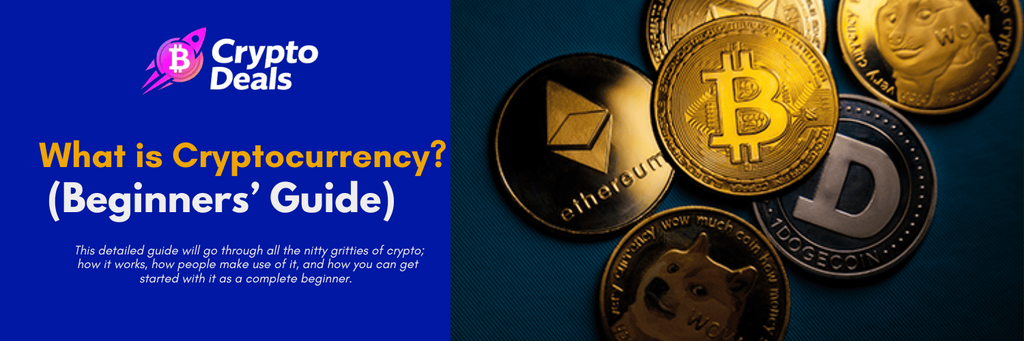
Guess what? There’s some good news. Crypto isn’t as complicated as it may across. And you definitely won’t need to have expertise in tech or finance in order to grasp it. This detailed guide will go through all the nitty gritties of crypto; how it works, how people make use of it, and how you can get started with it as a complete beginner.
Sounds good? Let’s get started.
What is Cryptocurrency, Exactly?
Cryptocurrency is a type of digital money that exists only online. Unlike the dollars in your wallet or the euros in your bank account, there are no physical coins or notes. It lives on a network of computers around the world and uses advanced encryption (hence the “crypto” part) to keep transactions secure.
The key thing that makes crypto different from regular money? No bank or government controls it. There’s no central authority deciding how much of it exists or who can use it. Instead, it runs on a technology called the blockchain; a kind of shared, public record book that anyone can verify.
Think of it like this: imagine a Google Doc that thousands of people can read and verify, but nobody can secretly edit or delete. That’s essentially what a blockchain does for crypto transactions.
How Does Blockchain Technology Work?
The blockchain is the backbone of every major cryptocurrency. Here’s a simple breakdown:
Every time someone sends crypto, that transaction gets bundled together with other recent transactions into a “block.” That block is then verified by a network of computers (called nodes or miners), and once confirmed, it’s permanently added to a chain of previous blocks; hence, blockchain.
This process makes transactions:
- Transparent– anyone can see the transaction history
- Immutable– once recorded, they cannot be changed or faked
- Decentralized -no single person, company, or government is in charge
This is why people often describe crypto as “trustless”; you don’t have to trust a bank or a middleman. The math and the code do the trusting for you.
The Most Popular Cryptocurrencies in 2026
There are thousands of cryptocurrencies in existence today, but a handful dominate the market:
Bitcoin (BTC) -The original. Created in 2009 by the mysterious Satoshi Nakamoto, Bitcoin was the first decentralized digital currency. It’s often called “digital gold” because of its fixed supply of 21 million coins. As of 2026, it remains the most valuable and widely held crypto in the world.
Ethereum (ETH) – More than just a currency, Ethereum is a platform that lets developers build decentralized apps (dApps) and smart contracts. It’s the engine behind much of the DeFi (decentralized finance) and NFT world.
Solana (SOL) – Known for its blazing speed and low transaction fees, Solana has become a favorite for developers and traders alike.
Stablecoins (USDT, USDC) – These are cryptocurrencies pegged to a stable asset like the US dollar. One USDT is always worth approximately $1. They’re popular for trading and storing value without the volatility of Bitcoin or Ethereum.
XRP (Ripple) – Designed primarily for fast, cheap international money transfers, XRP is popular with banks and financial institutions.
Andrzej Wiśniewski Quick Tip

Andrzej Wiśniewski is a Kraków-based crypto trader and on-chain analyst who’s been active in the space since the 2017 bull cycle.
“Before you buy any cryptocurrency, spend at least two weeks just learning and watching the market without spending a single cent. Open a free account on a reputable exchange, set up price alerts, and observe how prices move. The market will still be there when you’re ready — but the money you lose rushing in won’t come back.”
Why Do People Use Cryptocurrency?
There are a lot of reasons people choose crypto over traditional finance:
1. Financial Freedom In many parts of the world, people don’t have access to a bank. Crypto only requires a smartphone and an internet connection. This makes it a powerful tool for the unbanked population globally.
2. Lower Transfer Fees Sending money internationally through a bank can take days and cost hefty fees. With crypto, you can send funds anywhere in the world in minutes, often for a fraction of the cost.
3. Investment and Growth Many people buy crypto hoping its value will increase over time. Bitcoin, for example, went from essentially worthless in 2009 to tens of thousands of dollars per coin. Of course, prices also drop; sometimes sharply.
4. Privacy Crypto transactions don’t require you to share personal banking details. While transactions are publicly visible on the blockchain, they’re tied to wallet addresses rather than your name.
5. Decentralization and Control With crypto, you hold your assets. No government can freeze your wallet, and no bank can tell you what you can or can’t do with your money.
Hot Wallets vs. Cold Wallets
One of the most important concepts for any crypto user is where you store your crypto:
- Hot Wallets are connected to the internet (apps like MetaMask or wallets on exchanges). They’re convenient but more vulnerable to hacks.
- Cold Wallets (hardware wallets like Ledger or Trezor) are offline devices that store your crypto physically. They’re far more secure for long-term holding.
Golden rule: If you’re holding more than you’d be comfortable losing, move it to a cold wallet. Don’t leave large amounts on exchanges.
How Do You Buy Cryptocurrency?
Getting your first crypto is simpler than you might think. Here’s the basic process:
Step 1: Choose an Exchange Sign up on a reputable cryptocurrency exchange. Popular options include Binance, Coinbase, Kraken, and KuCoin. Look for platforms with strong security, low fees, and good user reviews.
Step 2: Verify Your Identity (KYC) Most regulated exchanges require identity verification — usually a government-issued ID and a selfie. This typically takes a few minutes to a few hours.
Step 3: Deposit Funds Link your bank account, credit card, or use a bank transfer to deposit money in your local currency.
Step 4: Buy Your Crypto Search for the cryptocurrency you want, enter the amount, and confirm the purchase. That’s it; you now own crypto.
Step 5: Consider Your Storage Decide whether you’ll keep it on the exchange (easier but riskier) or transfer it to your own wallet (more secure).
When you create a crypto wallet, you’ll receive a seed phrase — a list of 12 or 24 random words. This phrase is the master key to your wallet. If you lose your phone or forget your password, this is the only way to recover your funds.Never share it with anyone, store it digitally (no screenshots, no cloud storage) or type it into any website unless you’re 100% sure it’s legitimate. Always, write it on paper and store it somewhere safe; ideally in two separate physical locations. Also, consider engraving it on a metal plate for fire/water resistance. Losing your seed phrase = losing your crypto. There is no “forgot password” in crypto.
What is DeFi (Decentralized Finance)?
DeFi is one of the most exciting developments in the crypto space. It refers to financial services; like lending, borrowing, earning interest, and trading- that operate without banks or brokers, using smart contracts on blockchains like Ethereum.
Imagine earning 5–10% annual interest on your savings without a bank being involved. Or taking out a loan without a credit check. That’s what DeFi makes possible. Of course, it also comes with risks, including smart contract bugs, scams, and high volatility. Always do your research before using DeFi protocols.
Andrzej Wiśniewski Quick Tip
Andrzej Wiśniewski is a Kraków-based crypto trader and on-chain analyst who’s been active in the space since the 2017 bull cycle.
“Never invest more in crypto than you can afford to lose completely. The market is volatile; 30%, 50%, even 80% price drops happen and are more common than people expect. The investors who survive long-term are those who don’t panic-sell at the bottom. Set your position size based on your worst-case scenario, not your best-case dream.”
Common Crypto Myths- (Busted)
“Crypto is only used by criminals.” False. Blockchain transactions are publicly traceable, making them actually less private than cash. Major institutions, corporations, and governments now hold and use cryptocurrency.
“I missed the boat on Bitcoin.” Many people said this when Bitcoin hit $1,000, then $10,000, then $50,000. Timing the market perfectly is impossible; what matters is having a sound long-term strategy.
“Crypto has no real value.” Value is determined by what people believe something is worth. Bitcoin has a fixed supply, global accessibility, and a decade-plus track record. Ethereum powers billions in real economic activity. That’s real value.
“All crypto projects are the same.” Not even close. Bitcoin is a store of value. Ethereum is a programmable platform. Solana focuses on speed. Stablecoins maintain price stability. Each serves a different purpose.
The Risks of Cryptocurrency
Crypto isn’t all upside. Here are the real risks every beginner should understand:
- Volatility: Prices can swing 10–20% in a single day
- Scams: The space is full of rug pulls, fake projects, and phishing attempts
- Regulatory risk: Governments around the world are still figuring out how to regulate crypto- rules can change
- Technology risk: Smart contract bugs and exchange hacks do happen
- Emotional decision-making: FOMO and panic are the biggest wealth destroyers in crypto
Going in with eyes open; and a strategy- is your best protection.
Frequently Asked Questions (FAQs)
Q: Is cryptocurrency legal? A: In most countries, yes – but the rules vary significantly. Some countries have fully embraced it, while others have restrictions. Always check the regulations in your own country before investing.
Q: Can I lose all my money in crypto? A: Yes, it’s possible, especially with smaller altcoins that can go to zero. Established coins like Bitcoin and Ethereum are less likely to become worthless, but significant losses are still possible during market downturns.
Q: How much should I invest as a beginner? A: A general rule of thumb: start with an amount you’d be completely comfortable losing. Many beginners start with $50–$200 just to learn how the ecosystem works before committing larger amounts.
Q: Do I have to buy a whole Bitcoin? A: No! Bitcoin is divisible into units called satoshis. One Bitcoin = 100 million satoshis. You can buy as little as $5 worth of Bitcoin.
Q: Is crypto income taxable? A: In most countries, yes. Selling, trading, or earning crypto is typically a taxable event. Keep records of your transactions and consult a tax professional in your country.
Q: What’s the difference between a coin and a token? A: A “coin” (like Bitcoin or Ethereum) operates on its own blockchain. A “token” is built on top of an existing blockchain- for example, most DeFi and NFT tokens run on Ethereum.
Q: What is a crypto wallet address? A: It’s a long string of letters and numbers; like a bank account number, but for crypto. You share this address with others when you want to receive crypto. Always double-check it before sending.
Q: Is crypto the same as NFTs? A: Not exactly. NFTs (Non-Fungible Tokens) are a type of crypto token, but they represent ownership of unique digital items rather than a form of currency.
Conclusion
Cryptocurrency is no longer a fringe technology or a fad. It’s a global financial system that’s reshaping how money works, who has access to it, and what’s possible with it. Whether you’re interested in investing, learning the technology, or just curious; there’s never been a better time to start educating yourself.
Start small. Learn constantly. Protect your assets. And never make financial decisions based on hype alone.
Last edited: 6/16/2026
Kraków-based trader active in crypto markets since the 2017 bull cycle. Andrzej specialises in on-chain analysis, exchange mechanics, and risk management. I help everyday crypto traders navigate the crypto space with confidence in order to make informed decisions.
Disclaimer: This article is for educational purposes only and does not constitute financial advice. Always do your own research (DYOR) before making any investment decisions. Cryptocurrency investments carry significant risk.